“We Will Not Disappear”: Edna Griffin and Radical Civil Rights in Iowa
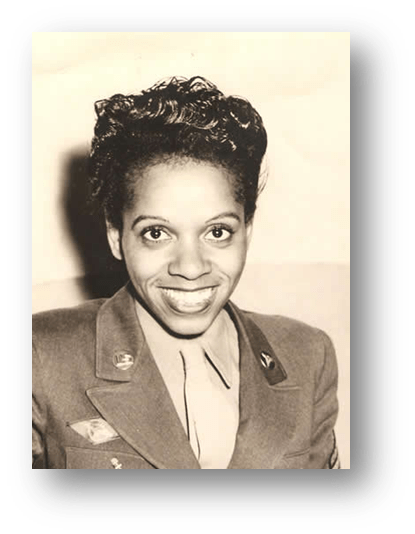
On August 20, 1951, in a rare moment free from “diapers, dishes, and dusting,” 41-year-old Edna Griffin sat down to pen a quick note to the recently arrested radical leader, Elizabeth Gurley Flynn. Griffin, a self-described housewife from Des Moines, expressed sympathy that Flynn was taken by police early in the morning, before being able to feed her children breakfast or arrange for their care. Griffin ended the note writing “a Negro mother draws inspiration and energy [from you]”.[1]
Taken alone, this note alone is a sympathetic missive from one mother to another, offering a few words of encouragement during a trying time. However, this was not the first time Griffin had written Gurley. Three and a half years earlier, Edna and her husband Stanley sent Gurley Flynn five dollars for “the defense fund of our Party, a true and steadfast friend of the Negro people.” The Party was the Communist Party of the United States of America (CPUSA), of which Gurley was national treasurer. The Griffin’s financial support of the CPUSA demonstrated a radical ideology coming from the middle-class Black family in Iowa, something so conspicuous, the note made its way to the FBI’s files. For over two decades, the FBI kept a file on the “subversive” activities of the Griffins, Edna especially. The federal government recognized that though Edna Griffin was a physician’s wife, a mother, a church-goer, and a substitute teacher, she was also a committed and astute radical organizer. Griffin’s activist work spanned the 1930s until her death in 2000, and while some of it is famous—her protest of a segregated drugstore in 1948 led to an “Edna Griffin Day”—and some of it not—some family members did not know of her Communist affiliation until after her death— her persevering critique of American racism, labor exploitation, injustice, and imperialism places her as one of the most important, and overlooked, Black woman radical organizers, activists, and thinkers of the twentieth century.
The Rosa Parks of Iowa?
There is more to Edna Griffin’s story, but the more contemporary accounts of her work are best left to those who knew her personally. What remains her enduring legacy is her multi-faceted, inclusive yet militant approach to struggles against injustice. As Edna Griffin protested police violence against Black veterans, she advocated for right in the Teachers Union. When she demanded her right to sit at Katz drugstore counter, she also fought for justice for an accused rapist. She spoke out against Cold War repression and violence, and defended an incarcerated Black mother and her children in Georgia. She criticized the NAACP, Des Moines City Council, prisons, and nuclear war. She walked with Martin Luther King, Jr., union leaders, communists, miners, and housewives. In 1985, at age 76, she made signs for a protest at a senator’s office who supported aid to the contras in Central America. One day, she went with a group of Quakers to Nebraska to sit in the middle of the highway to prevent transportation of nuclear warhead, an action that led to her arrest. In 1991, she rallied behind Anita Hill’s testimony of sexual assault against Clarence Thomas.[3] In 1985, she was elected to the Iowa Women’s Hall of Fame, an honored she cherished. In 1998, on the fiftieth anniversary of the Katz trial decision, the building that once housed the drug store was officially renamed the Edna Griffin Building. The same year, May 15 was declared “Edna Griffin Day” in Des Moines and she was elected into the Iowa African American Hall of Fame.[4] Perhaps the most fitting honor, though, is a memorial bridge, constructed in 2004, four years after she passed away. Iowa’s Department of Transportation hosted a naming competition, and Mrs. Jenny Schiltz’s fourth grade class at Longfellow Elementary School won the honor with their suggestion of “The Edna M. Griffin Memorial Bridge”. A bridge is an apt metaphor for Edna Griffin’s life; she spent her entire activist career building bridges with groups and organizations from all walks of life, mobilized with the sole purpose of a more just and equitable future. Though she did not always agree with those groups, she astutely understood her role as a piece of a much larger puzzle in the long march towards liberation. As a communist, she often had to hide or disguise her truly radical opinions, but she remained a committed revolutionary. I like to think Mrs. Schlitz’s fourth grade class knew exactly what they were doing when they named the bridge after her.
[1] Federal Bureau of Investigation, “Office Memorandum 12/13/51 RE: Edna Griffin, Security Matter -C,” file #100-355489 (Hereafter FBI, “Memo”). I am indebted to Noah Lawrence for obtaining these records through a Freedom of Information Act request, 8/16/2006.
[3] “May 1985 Newsletter,” Women’s International League for Peace and Freedom Papers, Box 2: WILPF: Newsletters, 1970-1989, IWA-UIL; Holly Smith, “Backers gather to discuss bold move by accuser Hill,” Des Moines Register, October 14, 1991.
[4] Iowa Department of Transportation, “Edna M. Griffin Memorial Bridge,” https://iowadot.gov/autotrails/EdnaGriffinMemorialBridge.
 Melissa Ford, Phd