Last spring, I was working on a presentation for the African American Intellectual Society annual conference on the Universal Negro Improvement Association in St. Louis, MO. The research took me quite deeply into the UNIA’s official organ, The Negro World. I am so grateful Schomburg Center, part of the New York Public Library system, has digitized much of the newspapers: https://blacknewyorkers-nypl.org/negro-world/. I thought I’d share a few of my finds, focusing on Black beauty.
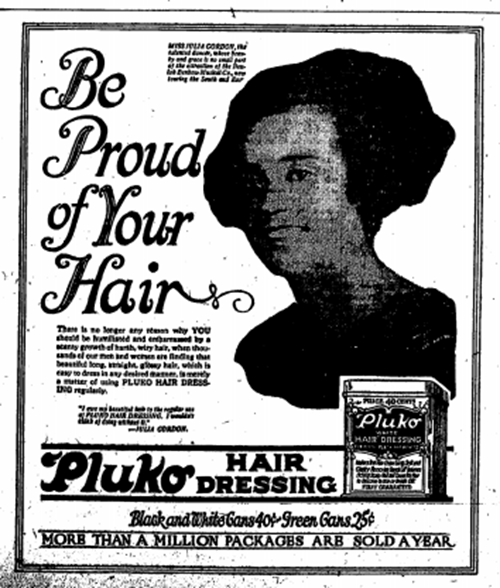
My students are always surprised that studying the history of hair can be so revealing, especially concerning women and men of color. But Garvey famously said, “Don’t remove the kinks from your hair! Remove them from your brain!” Standard representations of hair and beauty have always centered on what I look like- blonde hair, blue eyes, and white. But Garvey and other UNIA activists pushed to reject those white supremist notions. We will see that idea flourish in the 60s and 70s with the slogan “Black is Beautiful!” “Hair politics” is still an important issues (for example, a Black Texas teen was banned from graduation after he refused to cut his dreadlocks).
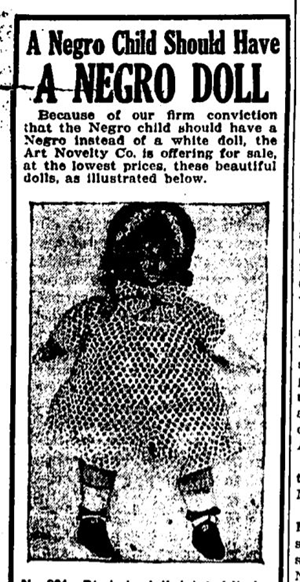
I especially love this advertisement saying “A Negro Child Should have a Negro Doll.” This sentiment echoed throughout the 20th century, and we see marginalized communities continue to push for representation in children’s toys, TV commercials, comic books, movies, and other places Garvey would never have imagined. The motto today is “representation matters,” and activists are certainly still pushing for representation of all marginalized people in something as seemingly innocuous as child’s toys. But, toys matter.
Whenever I’m at Target, I take a stroll through the aisles of Barbie dolls. I like to see how Mattel is changing up their latest productions. It’s encouraging, for sure, to see natural Black hair on dolls, “curvy” dolls, dolls in wheelchairs (with accessible ramp), and dolls with vitiligo. But the issue is, the white, skinny, blonde dolls are always the ones out of stock due to popularity. The challenges of erasing whiteness as the standard of beauty are going to take more than Barbie dolls.
 Melissa Ford, Phd